Personalised Itineraries
NepalTrekkingRoutesbyRegion
Every trek listed here is a starting point, not a fixed package. Deu will customise the route, pace, and duration to suit you.
The Nepali Himalayas contain eight of the world's fourteen peaks above 8,000 metres, including Everest (8,849m), Kangchenjunga (8,586m), and Annapurna I (8,091m). The trekking season runs from late September to early December and from March to May, when skies are clear and trails are accessible. Monsoon season (June–August) brings heavy rain to most regions, though the rain shadow areas of Mustang and Dolpo remain dry.
Guide: €40/day · Porter: €30/day
Permits, accommodation, and meals are additional. Everest region costs slightly higher. Contact for a full quote.
Deu's Home Region
Annapurna Region
The Annapurna region is where Deu has the deepest knowledge. He knows every lodge, every shortcut, every hidden viewpoint. Three major trek types await: the sanctuary, the full circuit, and shorter gems like Mardi Himal.
The Annapurna massif lies in central Nepal, roughly 150km northwest of Pokhara. It includes Annapurna I (8,091m)—the tenth highest mountain on earth and the first 8,000m peak ever summited, by Maurice Herzog in 1950. The region spans five climate zones, from subtropical bamboo forests at 1,000m to arctic conditions above 5,000m. Trekkers pass through Gurung and Magar villages where centuries-old farming traditions continue alongside stone-flagged trails. The Annapurna Conservation Area, established in 1986, is Nepal's largest protected area and home to snow leopards, Himalayan tahr, and over 450 species of birds including the Danphe (Himalayan monal), Nepal's national bird.


The Roof of the World
Everest Region (Solu Khumbu)
Nepal's most iconic trekking region. More challenging to access and slightly more expensive, but the reward is standing in the shadow of the world's highest peaks.
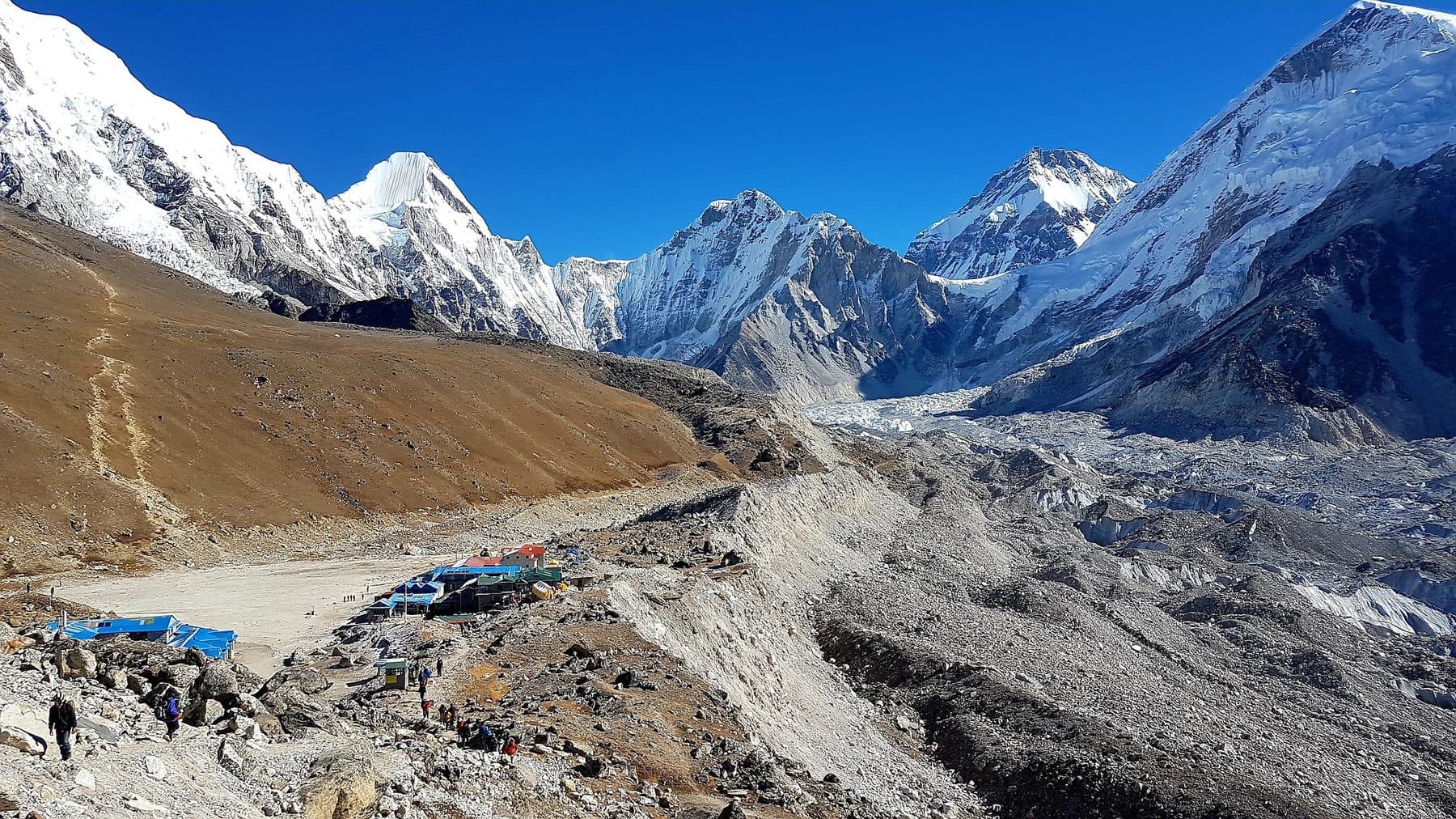
Solu Khumbu lies in northeast Nepal, home to the Sherpa people who migrated from eastern Tibet roughly 500 years ago. The region is dominated by the Khumbu glacier system and four of the world's highest peaks: Everest (8,849m), Lhotse (8,516m), Makalu (8,485m), and Cho Oyu (8,188m). Most treks begin with a flight to Lukla's Tenzing-Hillary Airport (2,860m) and follow the Dudh Kosi river valley northward. The Sagarmatha National Park, a UNESCO World Heritage Site since 1979, protects fragile alpine ecosystems and Sherpa cultural heritage. Namche Bazaar (3,440m) serves as the main trading hub and acclimatisation stop, with its famous Saturday market where Tibetan traders still cross the Nangpa La pass to trade salt and wool. The Gokyo valley, a quieter alternative to the main Everest trail, contains the highest freshwater lake system in the world and the Ngozumpa glacier—the longest glacier in the Himalayas at 36km.


True Remote Adventure
Manaslu Region
For trekkers who want genuine wilderness. The Manaslu region is restricted, meaning fewer visitors and an authentic experience that the busier routes can no longer offer.
Mount Manaslu (8,163m) is the eighth highest mountain in the world, located in the Mansiri Himal range about 64km east of Annapurna. The name comes from the Sanskrit word “manasa,” meaning soul or spirit. The Manaslu Circuit follows the Budhi Gandaki river valley through a landscape that shifts from humid lowland forest to arid, Tibetan-style terrain. Villages like Samagaon and Samdo maintain strong Tibetan Buddhist traditions, with ancient gompas, prayer wheels, and mani walls lining the trail. The region was opened to trekkers only in 1991 and still requires a restricted area permit, keeping visitor numbers low. The Larkya La pass (5,106m) is the highest and most demanding crossing, typically tackled in a single long day with an alpine start before dawn.

What'sIncludedinEveryTrek
Included
- Experienced English-speaking guide (Deu)
- Customised itinerary to your pace
- All permit arrangements
- Porter organisation (optional)
- Altitude acclimatisation planning
- Lodge/teahouse bookings along route
- Airport/hotel pickup in Pokhara
- Cultural interpretation throughout
Not Included
- International flights to Nepal
- Nepal visa fees
- Travel insurance (required)
- Meals on the trek (~1500-2000 NPR/day)
- Personal trekking gear
- Tips for guide & porters
- Alcoholic beverages
- Personal expenses & souvenirs